Choosing a game starts with the people at the table. Ask what makes play comfortable before committing to a long rules explanation. A small component check can reveal an obstacle that a player count or recommended age on the box will not address.
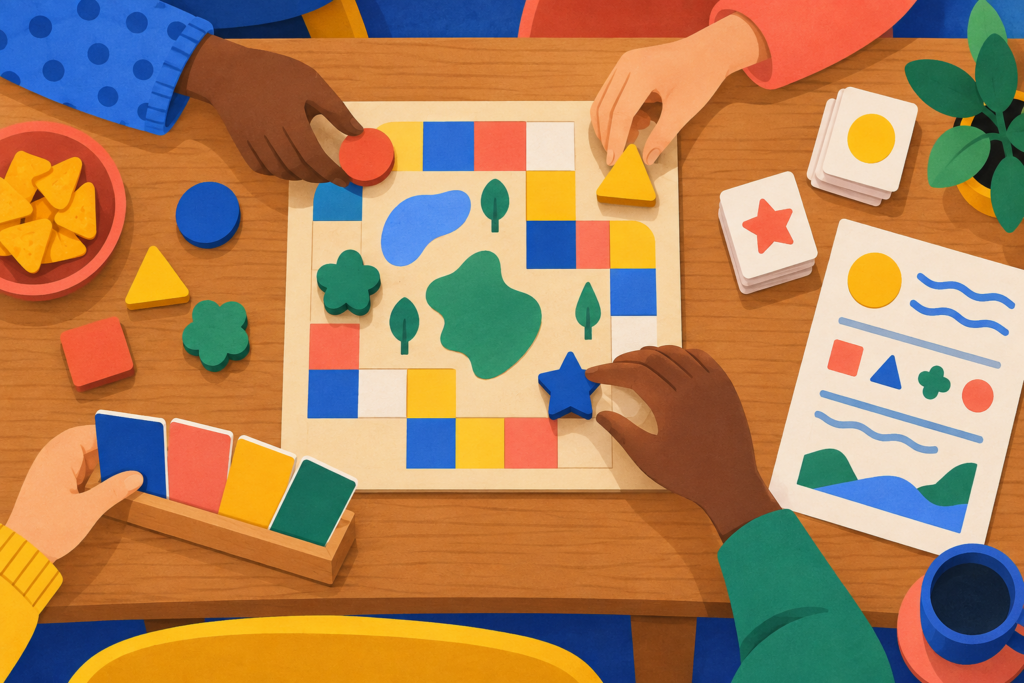
Meeple Like Us explores colour accessibility in board games. Its analysis is a useful reminder that colour can carry essential information. Check the particular game and players’ preferences rather than assuming one accessibility label answers every question.
Try a sample turn together
Lay out representative cards, tokens and player aids. Can players distinguish the information they need without relying solely on colour? Can they read shared information from their seats and handle the required pieces comfortably? Does the game require remembering information someone cannot readily perceive?
Ask about changes before making them. Larger reference notes or help moving pieces may be welcome, but they should not expose hidden information or remove a player’s choices. Explain any proposed adjustment and agree how it will work for everyone.
Keep a useful game-night note
Record what worked for this group, not a judgement about what a person can do. Save the agreed aids with the game and revisit the arrangement when the players change. If the core task remains uncomfortable, select another game. The goal is shared participation, not completing a title simply because it is already on the table.
Related reading: Teach a New Board Game With a One-Page Table Guide.